

Beyond the Answer: Teaching Students How to Think
September 29, 2026
There was a time when academic preparation was relatively easy to recognize: learn the material, master the subject, perform well on the assessment.
While these aspects of learning build a strong foundation, Browne Academy has always believed that learning goes much beyond memorization and assessment performance.
Students will encounter problems without step-by-step instructions. They will need to evaluate information, explain their reasoning, work with people who see things differently, defend an idea with evidence, change their thinking when the evidence demands it, and exercise judgment in situations where there may not be one obvious right answer.
Knowledge remains essential. But knowing what to do with what you know is becoming just as important.
Research on the skills students will eventually need reinforces that distinction. The World Economic Forum identifies analytical thinking as employers’ most sought-after core skill, alongside creative thinking, resilience, flexibility, curiosity, and leadership. The National Association of Colleges and Employers similarly emphasizes communication, critical thinking, teamwork, and professionalism.
Some call these “soft skills.” At Browne Academy, we see something more fundamental.
They are part of what it means to be well educated.
Rethinking what academic rigor looks like
At Browne, rigor isn’t measured simply by how much material a student can master. It is also reflected in what students are expected to do with what they learn.
You can see that beginning in our Lower School.
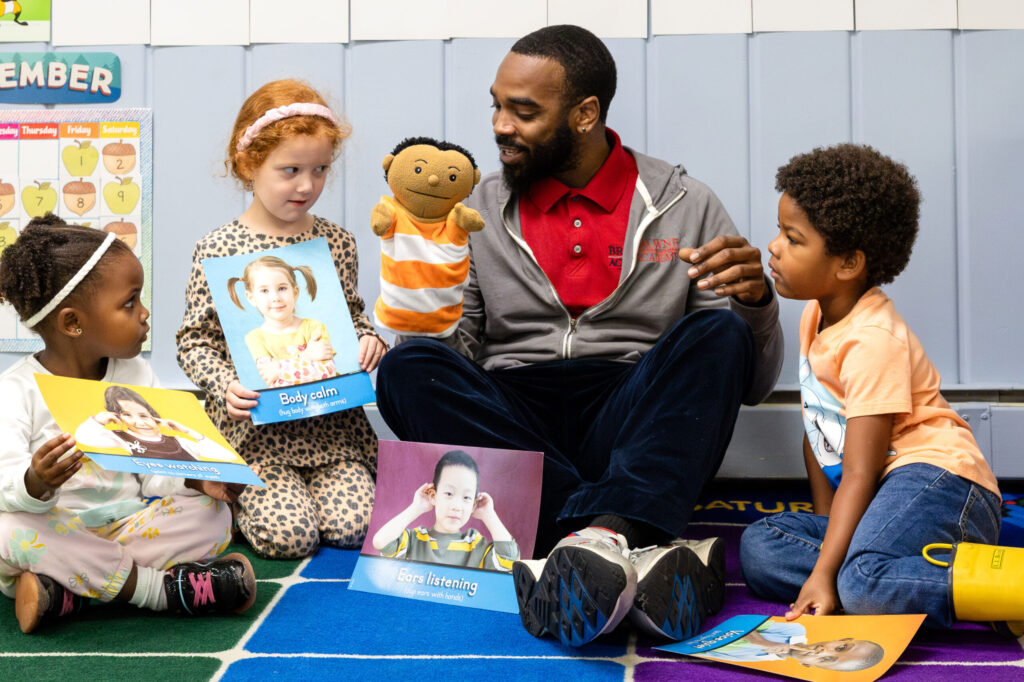
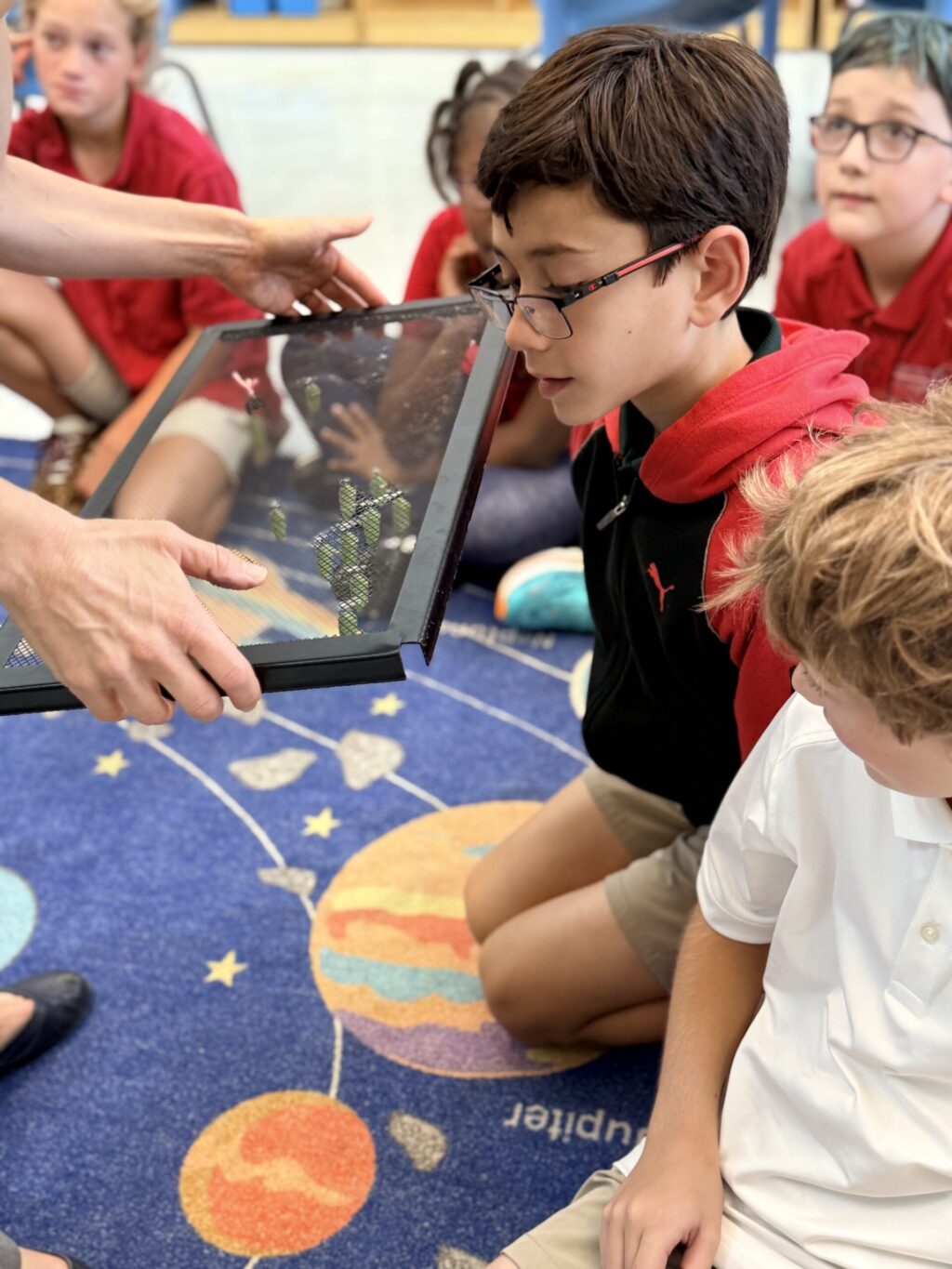
During Math in Focus, students aren’t simply working toward an answer. Teachers ask questions that encourage them to uncover mathematical relationships and explain their reasoning. Students hear a familiar invitation: “Put on your thinking caps.” The message underneath it is important: Don’t just tell me the answer. Show me how you’re thinking.
In social studies, Browne students use InquirED, an inquiry-based curriculum that begins with questions and asks students to investigate, make connections, examine evidence, and construct understanding rather than simply receive information.
Then the expectations grow.
By Middle School, students participate in We the People, studying the Constitution and preparing to defend their understanding of constitutional principles before a panel of judges. They must know the material, certainly. But knowing it is only the beginning. They have to articulate a position, support it with evidence, respond to questions, think on their feet, and communicate under pressure.
Think. Inquire. Defend.
These aren’t separate skills Browne adds around an academic curriculum. They illustrate what the curriculum is designed to develop. They’re not simply part of our established curriculum but represent a core piece of our teachers’ way of thinking and instructing. Regardless of the lesson, our teachers incorporate these skills organically, giving our students opportunities to nurture their approach to learning.
And that distinction matters.
A child does not suddenly become an independent thinker in high school. The confidence to speak up, the willingness to reconsider an assumption, the ability to ask a better question, and the judgment to determine what to do when the path isn’t obvious are built through years of practice.
That is one of the advantages of Browne’s preschool–8th grade model. With their teacher’s guidance and encouragement, students have time to move from discovering that their thinking matters to learning how to examine it critically, communicate it clearly, and stand behind it.
Browne’s values of Excellence, Diversity, Character, and Community live within that process. Excellence asks students to push their thinking further. Diversity requires engaging seriously with perspectives beyond their own. Character appears when ideas are challenged or mistakes are made. Community teaches students that learning is strengthened by what others bring to the conversation.
The measure of an exceptional education shouldn’t simply be what a child knows when they leave a school.
It should also be visible in what happens when they encounter something they don’t know.
Do they ask a question? Seek evidence? Listen? Adapt? Speak up? Try another approach? Trust themselves enough to begin?
For families exploring independent schools in Northern Virginia, that may be one of the most revealing things to look for.
At Browne’s upcoming Open House, we invite families to look beyond what is being taught and notice what children are being asked to do: how they think, question, investigate, explain, create, and take increasing ownership of their learning.
Because we cannot know exactly what challenges today’s children will encounter tomorrow. But at Browne, we can make sure they know how to meet them.