








The Case That Was Never Meant to be Won
November 12, 2026
Fourteen eighth graders. One question at the heart of American history. And a classroom where the strength of an argument mattered more than the verdict.
There is a difference between knowing history and knowing what to do with it.
Students can memorize dates, identify influential figures, and explain pivotal moments in American history. But what happens when they’re asked to examine those events together, consider conflicting interpretations, and defend a conclusion of their own?
At Browne Academy, we believe that’s where knowledge begins to become intellect.
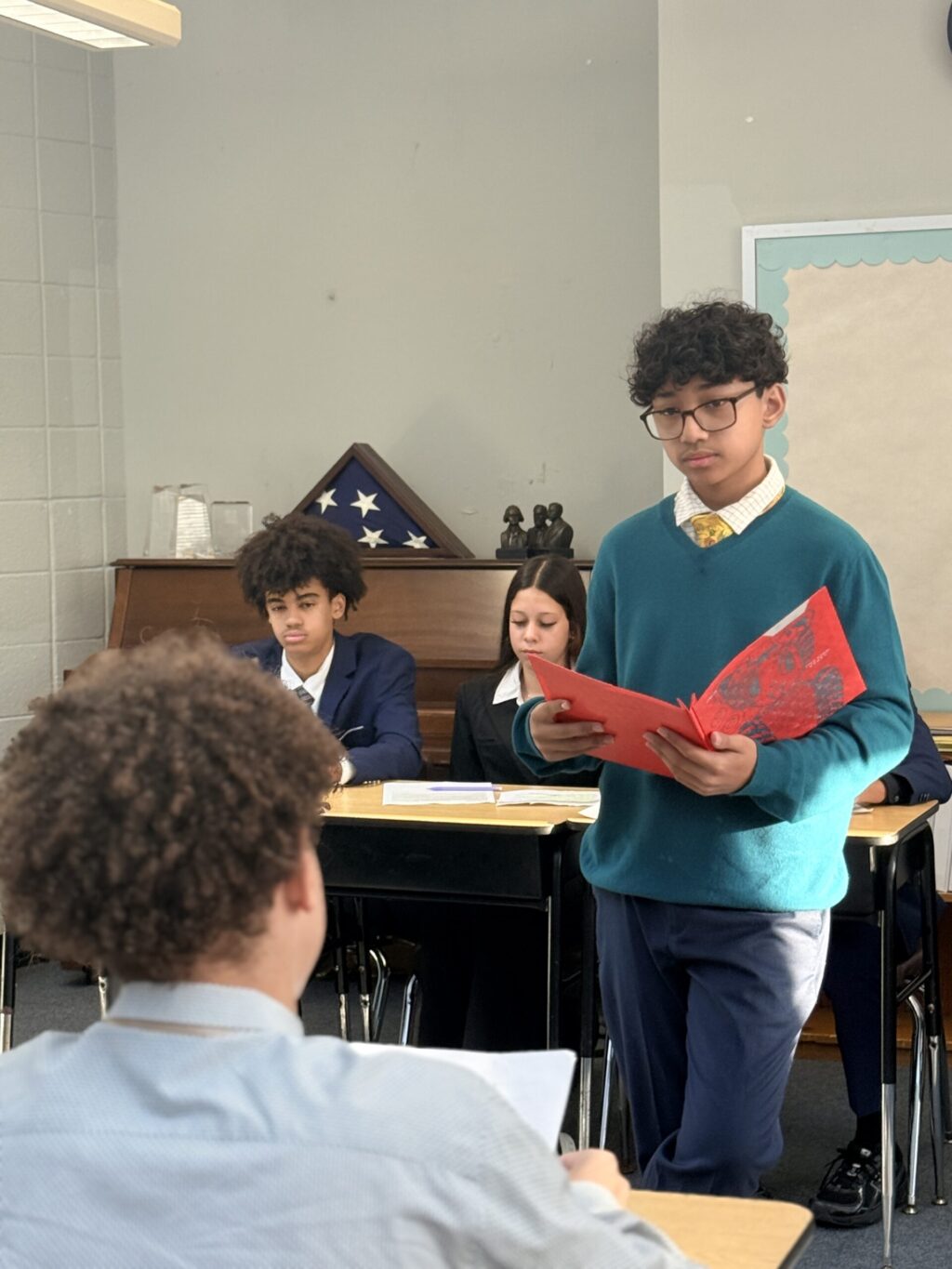
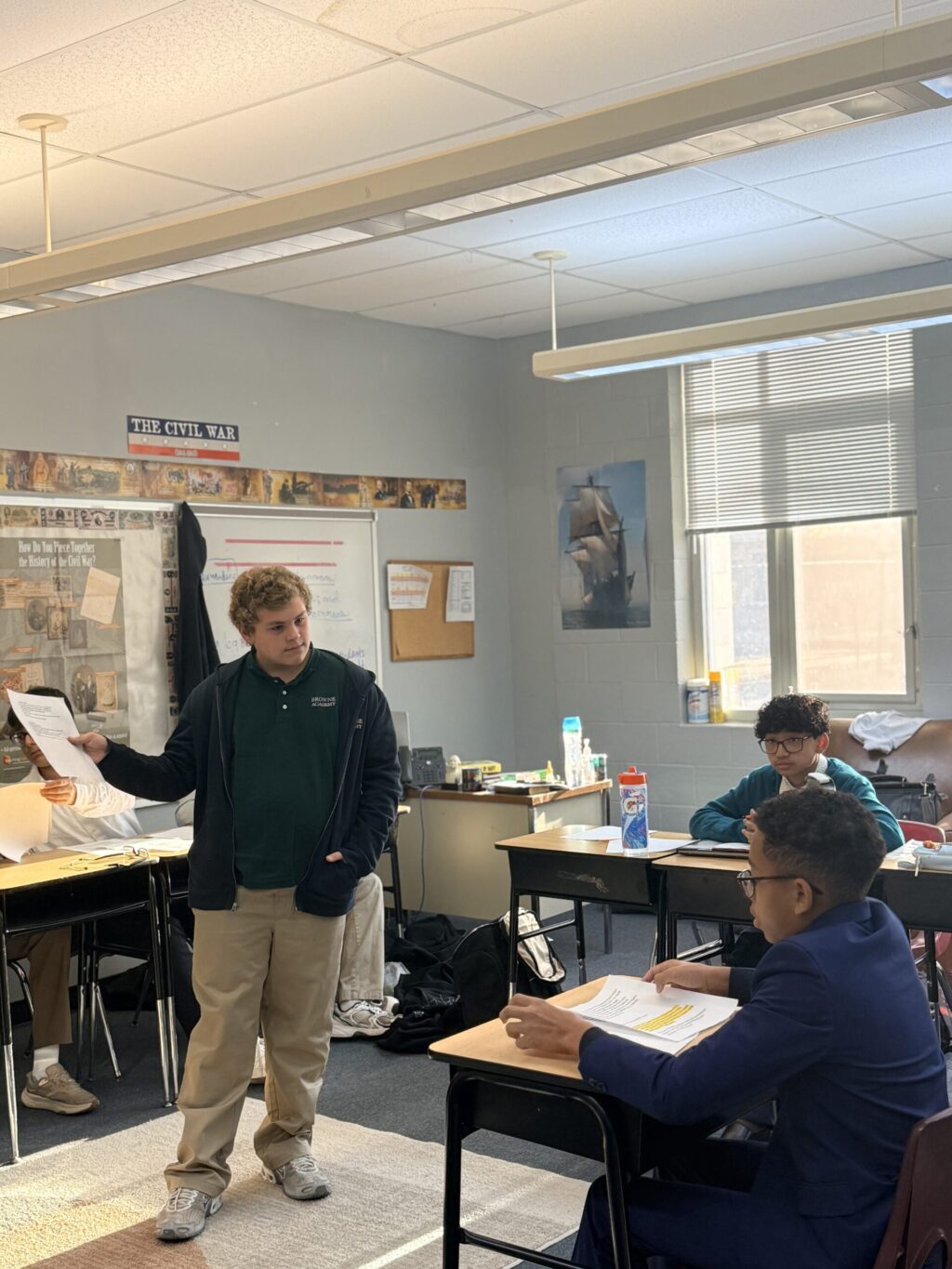
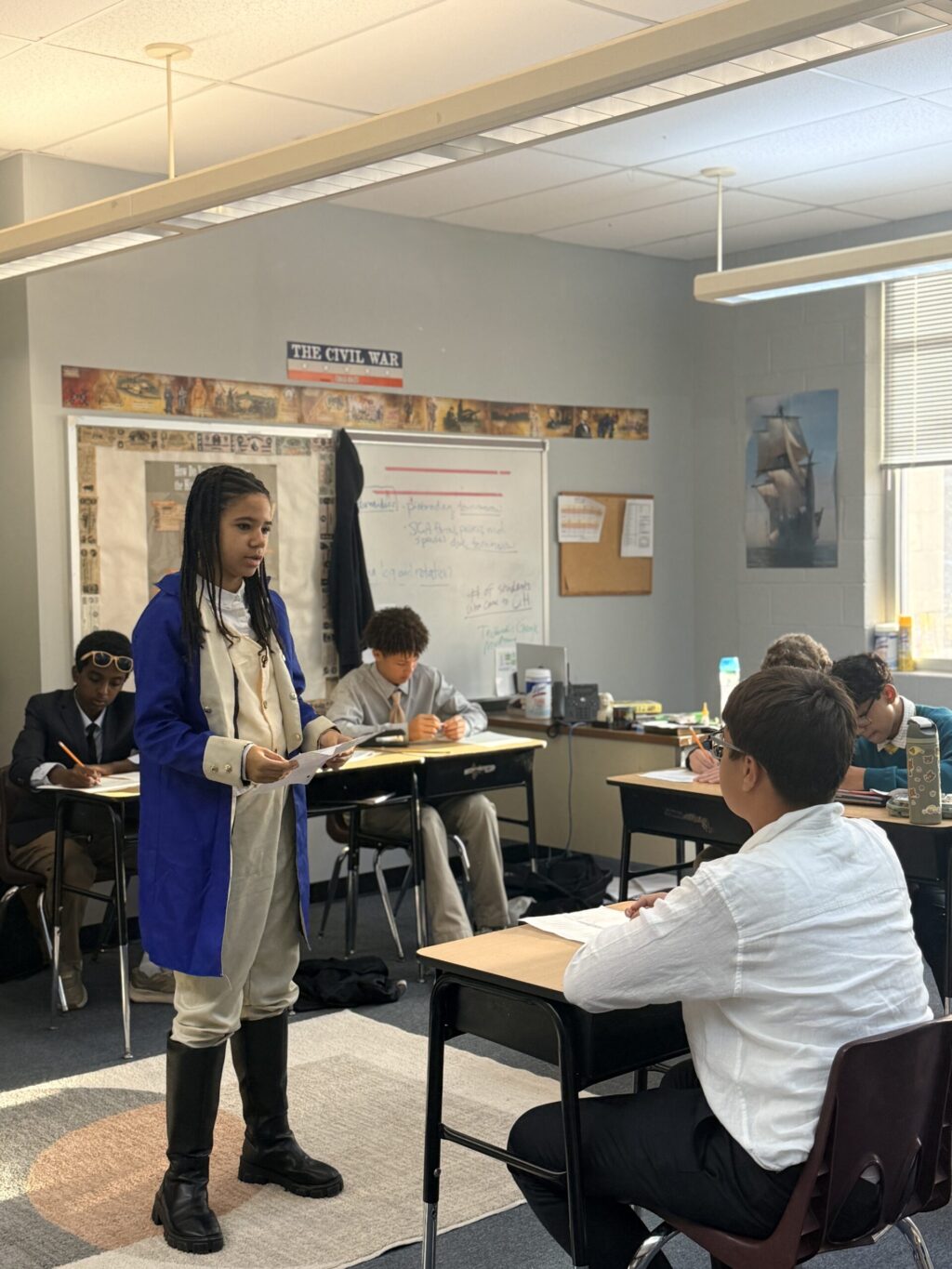
Recently, fourteen eighth graders put that belief into practice when Mr. Ramkissoon transformed their history classroom into a courtroom and placed the United States on trial.
A Question Worth Examining
The charge: Had the United States lived up to the Declaration of Independence’s promise that all are created equal?
Instead of completing a traditional unit test, students became prosecutors, defense attorneys, and historical witnesses. They examined the nation’s founding ideals through the experiences of individuals including Ida B. Wells, Wong Chin Foo, Elizabeth Eckford, Mildred Loving, Thurgood Marshall, and Jennifer Keelan.
Their task wasn’t simply to recount these individuals’ contributions. It was to understand how their experiences shaped the nation’s ongoing pursuit of equality and what those experiences revealed about the promise made in 1776.
Mr. Ramkissoon assigned students to opposing sides rather than allowing them to choose their positions, encouraging them to explore interpretations they might not have considered otherwise.
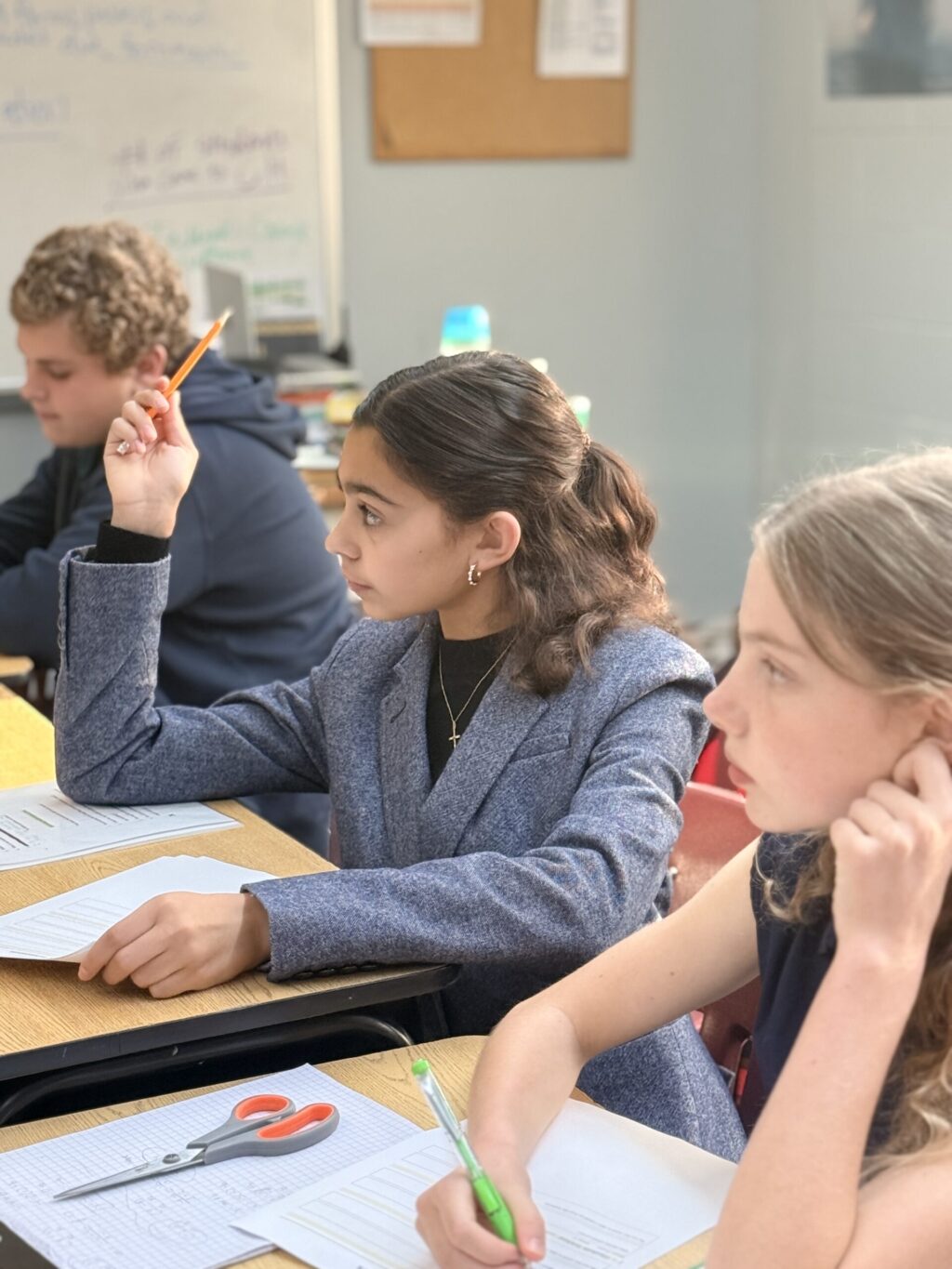
Over two weeks, students researched their cases, developed arguments, prepared witnesses, and anticipated the questions their classmates might ask.
For eighth grader Declan, the responsibility of building a persuasive case made the research itself more meaningful.
“In my opinion, History on Trial was probably the best way to learn about American history because we had to present an argument, we had to research everything we needed to know, and because we all wanted to win, it really motivated us to work hard and do our research.”
When the Evidence Speaks
As the trial unfolded, students delivered opening statements, questioned witnesses, raised objections, and challenged the arguments presented by the opposing side.
Every claim needed evidence. Every response required students to listen, consider what they’d heard, and decide how best to proceed.
But perhaps the clearest demonstration of their learning came in the closing statements.
Representing the defense, lead attorney Adeline argued that the nation’s failures did not necessarily mean it had abandoned its founding promise.
“The prosecution has shown you that America has made bad decisions. They have not shown you that they forgot. Those are not the same thing and that very difference makes up this whole case.”
For the prosecution, lead attorney Laurel offered a different interpretation, questioning why the nation’s promise of equality remained unresolved after nearly 250 years.
“A promise that was kept does not stay a question for two hundred and fifty years. We, the people, are still asking this question because we deserve the answer.”
Neither statement was simply a recitation of historical facts. Each represented a student drawing connections across centuries of American history, weighing the evidence, and developing an interpretation they could defend.
And neither argument was intended to settle the question.
More Than a Verdict
When the trial concluded, no verdict was rendered. That was intentional.
For Mr. Ramkissoon, the purpose of the assessment was never to determine which side had won, but to help students understand their place in a historical conversation that continues today.
“The Declaration of Independence gave us the proposition that all men are created equal, but it didn’t settle what living by that proposition would require. Generations of Americans have wrestled with that question, and I wanted my students to recognize that they’ve inherited it, too.”
He continued:
“The trial wasn’t about arriving at the right verdict. It was about learning to think seriously, argue honestly, and engage thoughtfully with people who see things differently. Those are habits that matter in a classroom, but they matter even more in a republic.”
The experience also demonstrated that intellectual growth isn’t always an individual pursuit.
For examining attorney Veronica, some of the most memorable moments happened during the preparation, as her team learned how to work together, navigate different approaches, and support one another.
“History on Trial truly solidified my ability to work in groups, and in my opinion, the final case that we presented was excellent, not because one person just carried the team, but because we carried each other.”
And for Ava, the opportunity to engage with history in a new way left her eager for more.
“I’m used to doing boring presentations or slideshows, but this really gave me a way to delve deep into the history that we were learning. I’m very excited to see what other projects Mr. Ramkissoon has planned for us!”
The Work of Becoming a Thinker
What made History on Trial meaningful wasn’t simply the creativity of the assignment. It was what the experience asked of our students.
They needed historical knowledge to build their cases. They needed curiosity to investigate questions without obvious answers. They needed the discipline to evaluate evidence, the confidence to defend their reasoning, and the openness to recognize merit in an opposing argument.
They also needed one another.
At Browne, these are not skills we expect students to develop all at once, or only when they reach Middle School. They grow through years of asking questions, making discoveries, taking intellectual risks, and learning alongside teachers and classmates who know when to challenge them and when to offer support.
By eighth grade, those experiences come together in moments like this one, when students are trusted to take ownership of demanding work and discover just how much they’re capable of.
The courtroom may have closed without a verdict, but the students left with something they could carry into their next conversation, classroom, or challenge.
Not simply more knowledge of American history, but a stronger understanding of how to put that knowledge to work.